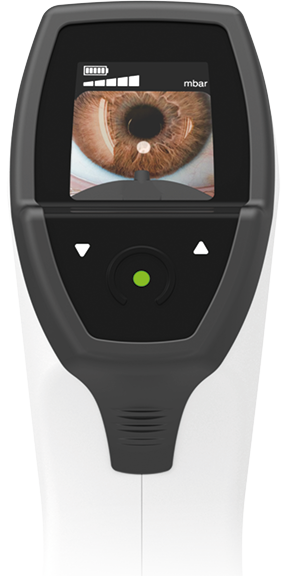
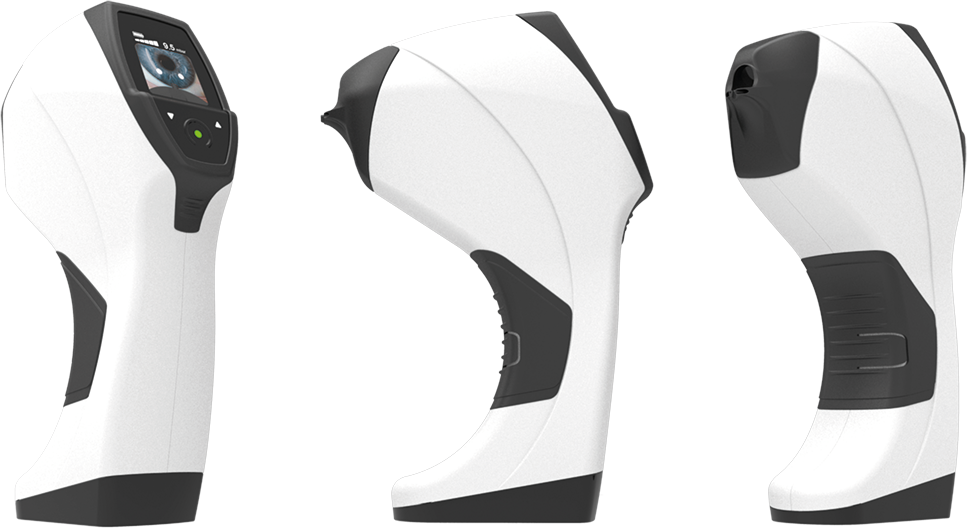
First portable, non-contact device to assess corneal sensitivity, a key indicator of corneal nerve function and ocular surface health.
Helps detect and monitor patients at risk of alterations in corneal sensitivity.
Innovative technology for a more compresensive eye exam
Suggested patient profile:
Contact lenses
Diabetic keratopathy
Dry Eye Disease
Previous segment surgery
Glaucoma
Key features
Contactless
Non-invasive and safe technology
Portable
Quick and easy to use, designed for appropriate placement in the slit lamp.
Innovative airflow technology
Uses a patented flow technology and a high-precision electronic LED positioning system.
Five standardized stimulus levels
They help to classify corneal sensitivity into different categories, serving as a guide to the degree of impact on corneal nerve function.
Replicable results outside the operator
For consistent and reliable patient follow-up.
No consumables required
Non-contact esthesiometry
Stimulus Level - Threshold
Corneal sensitivity1,2
Level 1
Suspected hypersensitivity
Level 2
Normal corneal sensitivity
Level 3
Level 4
Mild corneal hyposensitivity
Level 5
Severe corneal hyposensitivity
No response at any level (Level 6)
Very severe corneal hyposensitivity
1. Merayo-Lloves J, Gómez Martín C, Lozano-Sanroma J, Renedo Laguna C. Assessment and safety of the new esthesiometer BRILL: Comparison with the Cochet-Bonnet Esthesiometer. Eur J Ophthalmol. 2024 Jul;34(4):1036-1045. 2. Ruiz-Lozano RE, Quiroga-Garza ME, Ramos-Dávila EM, Pantaleón-García J, Khodor A, Komai S, et al. Comparative Evaluation of the Corneal Sensitivity Thresholds between the Novel Non-Contact and Cochet-Bonnet Esthesiometers. Am J Ophthalmol. 2025 Mar;271:407-416.
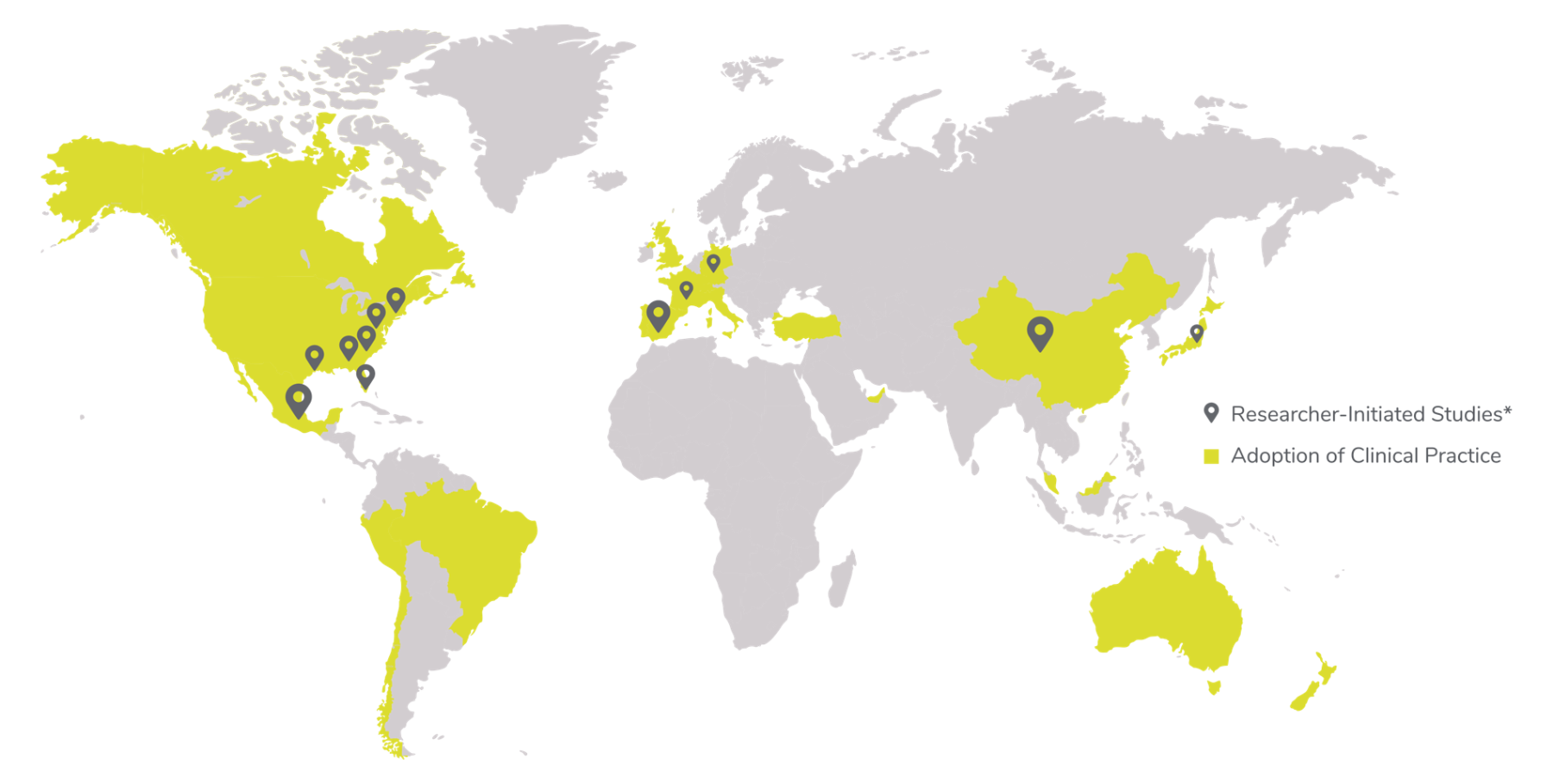
Worldwide presence of corneal esthesiometer Brill
*Ongoing clinical research initiated by healthcare professionals to date, not sponsored by Brill.
Clinical value and applications
Corneal sensitivity assessment
It allows the screening of patients at risk of alteration of the function of the corneal nerves.
Patient follow-up and therapeutic assessment
Repeatability and standardisation allow reliable monitoring of the evolution of the patient’s corneal sensitivity, supporting clinical and/or therapeutic monitoring over time.
Helps with selection and follow-up in clinical trials
It facilitates the inclusion or exclusion of patients in clinical trials and helps to monitor the efficacy of therapies and the possible adverse effects of drugs on corneal sensitivity.
The content you are about to view is intended exclusively for healthcare professionals authorized to prescribe or dispense medicines and medical devices.
Please confirm that you are a qualified healthcare professional with the necessary specialized training to correctly interpret the information contained in this section.